
Raised on AM
Picture if you will, a time before video killed the radio star.


KFRC, 610MHz on the AM dial. The station of my childhood. The source of my earliest musical memories.
A little history from The Google:
Historically, KFRC is one of the most legendary radio brands on the West Coast, having launched on 610 AM in September 1924. During its "Big 610" era, which began in 1966, it became the Bay Area's dominant Top 40 rock station. Legendary figures like program director Bill Drake and morning host Dr. Don Rose made it a globally recognized benchmark for Top 40 radio.
I don’t know about you, but I am not one of those people that remembers a lot from their early childhood years, but I remember the music. Those memories start around 1970. The other day, I was researching something and looked up the Billboard Top 100 from 1970. I was stunned. I know about 90 of these. I can distinctly remember listening to them on KFRC, on my first little transistor radio, or in the car. I can recall singing along to most of them. If you have been following my adventures here on Substack, you will know that many of these songs have been referenced in my writing or various collabs, like the one I did with Mark Nash recently.
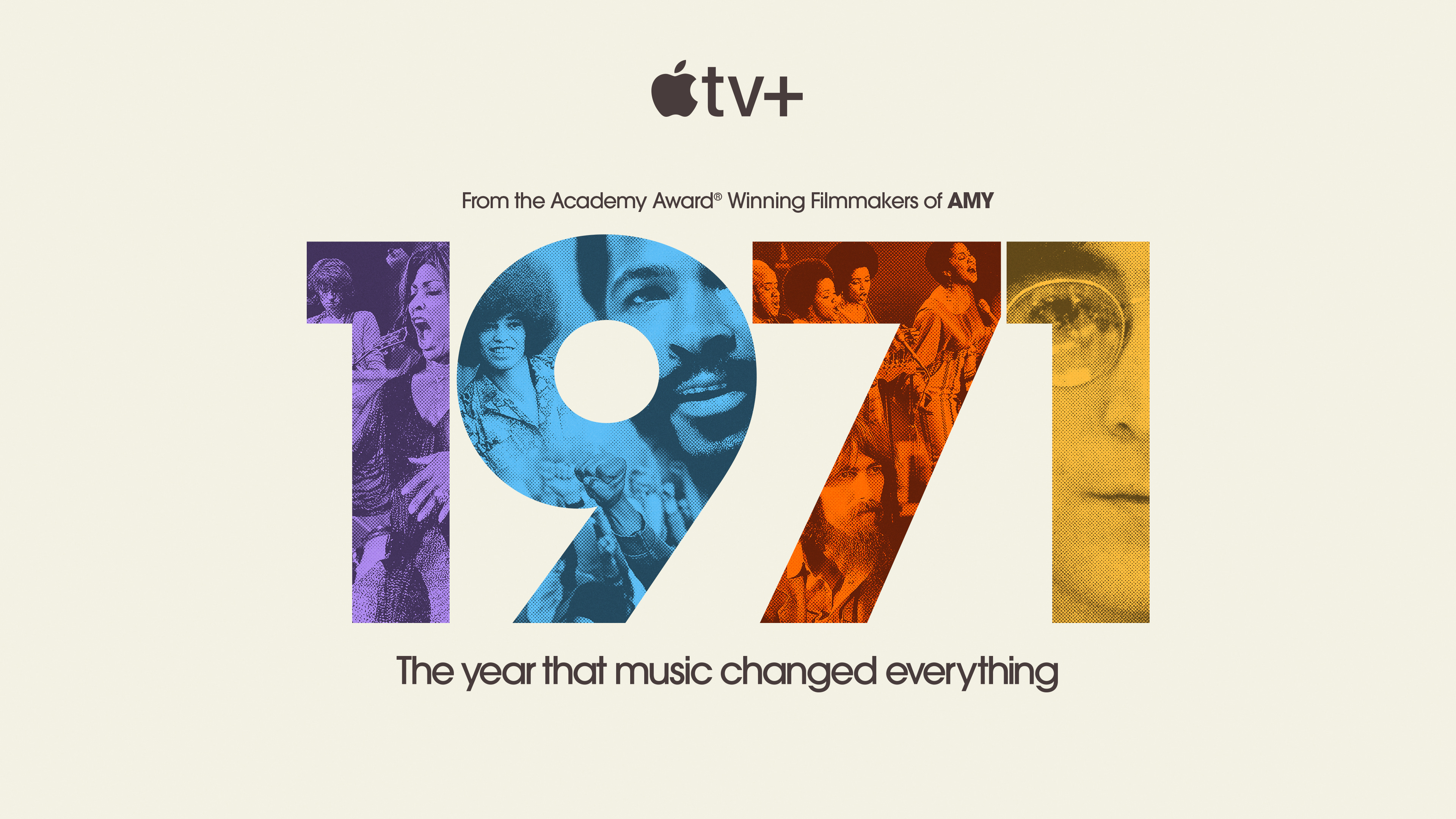
There is an entire documentary about music from 1971 on Apple TV. I recommend it. It’s not a 10/10 series, but I think music lovers will enjoy it. At least those of us of a certain age. The Billboard Top 100 from 1971 is equally bonkers.
Older GenX types were too young for the Ed Sullivan Show. However, we were inundated with variety shows. Everything from Andy Williams to HeeHaw and Sonny and Cher to The Midnight Special. The list goes on an on. There were also musical guests on the other comedy or variety shows, like Carol Burnett. These shows gave us the opportunity to put faces to the voices we were hearing on the radio. Everyone back then was what I would call groovy glamorous. Our grandparents, including mine, would moan about the facial hair, long hair on men, hippie clothes, etc, but they still liked the music. I still like groovy glamorous.
AM radio was ever present. A faithful companion to a shy, poor, bookish, only child. It provided the soundtrack to my early childhood. By the mid-late 70s, FM radio was starting to take over. The formats more niche and the DJs a little wilder.
Thinking about the 250th birthday of our country has me thinking back to the last big celebration in 1976. Things were far from perfect, but for a 10 year old kid, it was pretty magical. Nixon had resigned, which I did not really understand, but the grown ups seemed happy about. We had finally withdrawn from Vietnam the year before. There was a lot of red, white and blue everywhere, bicentennial editions of things, like the quarter and the reintroduction of the $2 bill. Music was changing. Disco was starting to take over. Looking back, I would argue the country was changing. AM radio was changing. There were a lot more news stations, the top 40 stations were starting to play more oldies.
1976 was probably the last big year of AM radio for me.
My uncle’s influence on my musical taste was profound. He had switched to FM, which meant I needed to switch to FM. (I wrote about his influence on me in my essay Ritchie Blackmore’s Rainbow.) I was getting more and more into rock music. I alternated between AM and FM for the next couple of years. By 1978, I was buying more vinyl (thanks to my paper route money) and playing it on our “new” stereo (thanks to my mom marrying my stepdad.) Cassettes were making their move into car stereos. And someone at Sony was designing the first Walkman, which would show up the following year.
Reflecting back now, I realize the concept of being raised on Top 40 AM is unimaginable for young people today. That makes me a little sad. I could not have asked for a better musical introduction than the one I got from KFRC in the early 1970s. I am sappy and nostalgic by nature. Not in the “everything was so much better back then” sense. Just in the reflective sense. I doubt that many of the younger GenX crowd can even relate to this. Their formative years found their parents listening to FM, vinyl, and cassettes. AM was starting to go to the dogs by the time they were born. Yes, there are two distinct versions of GenX.
The nerd in me wants to go back and trace the downfall of AM radio and look at the correlation to rising division in our politics. AM radio is unrecognizable today to what it was in my youth. Back then it was Top 40, oldies, and in places like the Bay Area, jazz and classical, versus country in other parts of the US. Good old NPR, that’s National Public Radio, for those of you outside the US. They were big on jazz and classical back in the day. Now NPR is in danger of going the way of the dodo.
I feel fortunate to have been raised on AM, and KFRC in particular. Decades later, I still remember their most famous DJ, Dr. Don Rose. Casey Kasem’s syndicated American Top 40 show every week was a must listen. I still listen to it on Sirius XM 70s on 7. BTW, AT40 debuted on July 4th weekend 1970.
I have seen most of the musical formats come and go in my lifetime. I still remember my great grandparents playing 78 records. My stepdad had a reel to reel machine. Records, 8 track tapes, cassettes, CD, mini discs, digital music, ripping CDs to load onto the computer, Napster giving way to streaming, I have seen it all. I am so happy to see the old formats coming back. Not because of nostalgia, because people are waking up to the fact these old formats are just better. Better listening, deeper connection, and something that doesn’t require a subscription to enjoy. I hate the fact that my last two cars have not had a CD player. Hopefully, the car companies will wake up.
I have shared a few of the 70s Billboard Top 100 lists, if you clicked the links. I encourage you to look at all of them from 1970-1979. Am I biased, hell yes I am. particularly about the first half of the decade. I will go to my grave swearing that the 70s are the strongest musical decade overall. To make this a little easier on you, here are the rest of them:
1972, 1973, 1974, 1975, 1976, 1977, 1978, 1979
By the later part of the 70s, the music I was listening to was on the rock charts (before there really was such a thing) and therefore FM radio.
Please keep in mind, I am passionate about music from the 30s, 40s, 50s, and 60s as well. Arguably, just as knowledgable. The 80s were a mixed bag for me. The 90s, worse. Is there great music in these decades too? Of course there is, but nothing that stacks up to the manic diversity of the 70s as far as I am concerned. I won’t lie, I mostly checked out in the noughties. And the last decade, I confess, I was mostly listening to new country music, because at least it had real musicians playing on it.
I am making a concerted effort to get back into new music discovery, with the help of folks here on Substack. I felt bad that I could not be more active in Kevin Alexander’s Best Record of 2001 Series, but I only know about half of those records. For me, 2001 was all about Alicia Keys. Yes, yes, I know, there are a bunch of other great records from that year, but that was the standout album for me that year.
I am slowly mending my curmudgeonly ways. (Old lady shakes fist at clouds, mumbles about lawn.) However, for all my forays into discovering new music again, very little of it “sticks” the way the older stuff does for me. Of course, there are exceptions. There always are. I love it when I do come across new gems. But I have to be honest, I am more likely to fall in love with older music that I haven’t heard than the new stuff. I have not done a deep dive to examine why that is. It’s just something I have observed about myself. Maybe it’s because I am not a lyrics vs music person. For me, it has to be both. Perhaps it’s the production part of my brain that loves the sound of analog recordings.
I know MTV was very important for the younger GenX crowd. I was intrigued, but I was already 15 when it first aired. The first few years were pretty boring. There were not enough videos out yet, and a lot of them were pretty terrible. I was about to finish high school. I was working at a burger joint. By the time MTV was hitting it’s stride, I was in college and working full time. I didn’t have time or the inclination to watch music videos.
So for me, video didn’t kill the radio star. FM radio was the first blow. The walkman and disc man were the second. And I suppose, starting my lifelong career in telecom in 1985 was the final blow.
I just looked at the Billboard Top 100 for 2025. WTAF? OK, I admit it, I like Bad Bunny. I have heard Pink Pony Club and about 10-15 other tracks. I know who about half the artists are, and I couldn’t care less about them. I have tried to listen to the “pop” stations on Sirius XM, I usually can’t get past 1 or 2 songs. Most of my new music discovery comes from The Spectrum on Sirius XM (indie rock) or Substack these days. The new music I like is not making it on these lists. That’s fine. But seriously, how can Lord Huron not be on this list. For me, that was the best record of 2025.
In closing, once upon a time, all the best music really did make it on to the radio. Say what you will, but it was a lot easier when human curation was driving the listening experience. Shout out to all you musicstackers still doing the human curation, running internet radio stations, the DJs from my youth that are still giving it their all on Sirius XM, the kids that are bringing back college radio, and all the indie artists sharing their stuff here and elsewhere. If not for you, I would have given up. So, I don’t think video killed the radio star. I think format changes and ultimately algorithms killed the radio star.
xoxo
Taz
PS - All that being said, this tune is still catchy as hell…and if you swapped out video for algorithms, it was way ahead of it’s time.
I grew up on FM rather than AM but radio always felt magical to me and it will always occupy a warm place in my memory. Some of my favorite nights were spent turning the dial across the longwave bands, listening to stations fade in and out through the static, wondering where they were coming from.
If there was a show I loved, out came the blank cassette and I'd sit there waiting for the DJ to stop talking so I could hit "record" at exactly the right moment. I still have too many of those old tapes collecting dust. One of these days, I'll finally digitize them. (Yeah, sure. I've only been saying that for about 30 years, lol.)
Sadly, today's streaming, fragmented listening habits and shrinking attention spans haven't done radio any favors.
Thanks for sharing your memories!
This is such a warm read, and I love where you landed—that it wasn't video that killed the radio star, it was the algorithms. Which got me thinking about the song itself, because "Video Killed the Radio Star" has always been my favorite kind of pop trick: it's bright and bouncy and hooky as anything, and it's actually a little elegy about a whole world going obsolete. You put it on and dance to the sound of something dying. Your whole essay is doing the same thing that song does—mourning a vanished way of hearing music, but in a major key, with real affection instead of bitterness. That's the sweet spot of nostalgia, and you found it. And the human-curation point lands hard: the magic of AM Top 40 was that a whole city was hearing the same songs at the same hour, one shared dial. Thank you for this—Dr. Don Rose and a transistor radio never sounded so good.